Find answers to common questions about implementing effective ventilation solutions in Singapore's tropical climate
Yes, passive ventilation works well in Singapore when designed correctly for high humidity conditions. The key is understanding that our consistent temperatures (24-32°C) and regular wind patterns from the northeast and southwest monsoons provide reliable conditions for cross-ventilation strategies.
The system must account for humidity management. Installing windows on opposite walls creates airflow paths that move moisture-laden air out while drawing in fresher air. Window placement at varying heights leverages stack effect—warm air rises and exits through upper openings while cooler air enters below. During monsoon seasons, operable louvres allow ventilation while protecting against rain. Many HDB flats and landed properties in areas like Toa Payoh and East Coast have successfully reduced indoor temperatures by 3-5°C using these principles, cutting energy costs by 30-40% compared to constant air-conditioning use.
For a standard 4-room HDB flat (90-100 sqm), basic ventilation improvements typically range from SGD 2,500 to SGD 8,000. This includes installing ventilation grilles, additional operable windows, and ceiling fans with proper positioning. Landed properties require higher investment—between SGD 12,000 and SGD 25,000—depending on the building's size and complexity.
Major components include: aluminum louvre windows (SGD 300-600 per panel), ventilation fans for specific areas like bathrooms (SGD 150-400 each), ceiling fans with DC motors for efficiency (SGD 200-500), and installation labor (typically 20-30% of material costs). Solar-powered roof ventilators add SGD 800-1,500 per unit. While upfront costs seem substantial, most households recover this investment within 3-4 years through reduced electricity bills. Properties in Bukit Timah and Serangoon have documented savings of SGD 150-300 monthly on cooling costs after implementing comprehensive ventilation upgrades.
Window placement depends on three factors: prevailing wind direction, building orientation, and interior layout. In Singapore, northeast winds dominate from November to March, while southwest winds prevail from June to September. Position inlet windows on the windward side (facing incoming wind) and outlet windows on the leeward side.
For HDB flats facing north-south, place larger openings on north walls to capture northeast monsoon winds. East-west facing units benefit from windows on shorter walls to minimize afternoon sun exposure while maintaining cross-ventilation. The outlet opening should be 25-30% larger than the inlet to create negative pressure that pulls air through the space. Vertical positioning matters—place inlets at sitting height (60-90cm from floor) and outlets near the ceiling. Rooms in the center of the home need high-level clerestory windows or transom panels above doors. A thermal imaging assessment (SGD 300-500) can identify hot spots and stagnant air zones, helping refine window placement before renovation begins.
Maintenance is minimal but essential for sustained performance. Clean window screens and louvre blades monthly to prevent dust buildup that restricts airflow—this takes 15-20 minutes per room. Inspect and lubricate window hinges and operators every six months using silicone-based lubricants. Check weatherstripping around operable windows annually and replace if cracked or compressed; replacement strips cost SGD 5-15 per meter.
For mechanical components, ceiling fans need blade cleaning quarterly and motor inspection yearly. DC motor fans are more reliable but should be checked for bearing wear after 3-4 years of continuous use. Roof ventilators require debris removal from caps twice yearly, particularly after monsoon seasons. Solar panel surfaces on powered ventilators should be wiped clean every three months to maintain efficiency. Budget SGD 200-400 annually for professional inspection of the entire system, including thermal performance testing. Regular maintenance prevents the 15-20% efficiency loss that occurs in neglected systems within just two years.
Yes, Singapore's Building Control Act and Housing & Development Board regulations govern ventilation modifications. For HDB flats, you must obtain approval from HDB before altering external walls, installing new windows, or modifying the building facade. This includes adding louvres or ventilation grilles visible from outside. Applications are submitted through the HDB e-Service portal with architectural drawings showing proposed changes.
Landed properties require approval from the Building and Construction Authority (BCA) if structural changes are involved. The Building Control Regulations 2003 mandate minimum ventilation areas: habitable rooms need openable area equal to at least 5% of floor area, while bathrooms require 0.3 square meters of ventilation. Fire safety codes restrict modifications near fire-rated walls and escape routes. For condominiums, obtain Management Corporation approval before external alterations. Professional architects or contractors familiar with local codes (registration with BCA required) can navigate the approval process, which typically takes 4-8 weeks. Non-compliance risks fines up to SGD 20,000 and mandatory restoration of unauthorized changes.
Founded in 2015, Ecomanagehub emerged from a simple observation: Singapore's tropical climate demands cooling solutions, yet conventional air conditioning systems consume excessive energy and contribute to urban heat islands. Our team of 12 building engineers and environmental consultants recognized that traditional architectural principles, combined with modern understanding of airflow dynamics, could provide effective alternatives.
We started by analyzing pre-war shophouses in Katong and Tiong Bahru—structures that maintained comfortable indoor temperatures through strategic window placement, high ceilings, and ventilation shafts. These buildings operated without mechanical cooling for decades. This research became the foundation of our approach to natural ventilation design.

We design ventilation systems that reduce dependence on air conditioning by 40-70% in residential and commercial buildings across Singapore. Our work focuses on measurable outcomes: lower electricity bills, improved indoor air quality, and reduced carbon emissions.
Each project begins with computational fluid dynamics analysis to map airflow patterns specific to your building's orientation, surrounding structures, and local wind patterns. We then implement solutions using operable windows, ventilation towers, solar chimneys, and strategic landscaping.
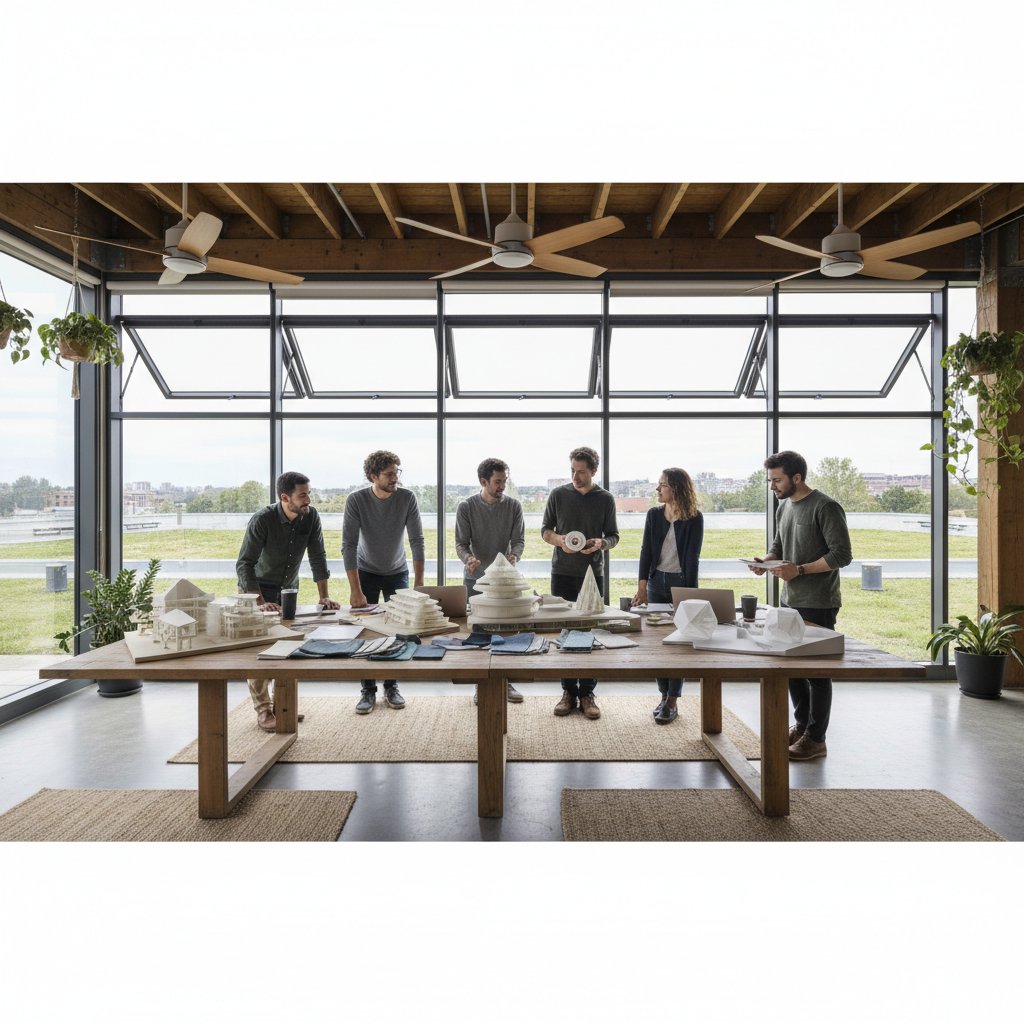
Over eight years, we have completed 147 projects ranging from landed properties in Bukit Timah to HDB flats in Punggol. Our team includes certified passive house designers, LEED-accredited professionals, and specialists in tropical architecture.
We conduct thermal comfort assessments using calibrated sensors that measure temperature, humidity, and air velocity at multiple points throughout your space. This data informs our design recommendations, which typically include cross-ventilation pathways, stack effect optimization, and thermal mass integration.
Every recommendation stems from airflow modeling, thermal analysis, and post-occupancy evaluation data. We measure results in cubic meters per second of air movement and degrees Celsius of temperature reduction.
Our solutions work within existing building constraints and budgets. We specify readily available materials and coordinate with local contractors familiar with Singapore's building codes and climate conditions.
We design systems that function effectively for 15-20 years with minimal maintenance. Our clients receive detailed operation manuals and seasonal adjustment guidelines to maintain optimal performance.
Since 2015, we have helped property owners in Singapore reduce their cooling energy consumption while maintaining comfortable indoor environments. Our approach combines building science principles with practical construction methods.
Located at 70 Frankel Avenue, our office operates Monday through Friday from 9:00 to 18:00, and Saturday from 10:00 to 14:00. We conduct site assessments throughout Singapore and provide detailed reports within 10 business days.